Key Takeaway
Yes, Orange County hard water is the norm, not the exception. Irvine Ranch Water District’s latest water quality report shows average hardness across its supply sources falling in the “very hard” range, and most of north, central and south OC draws from the same mineral-rich groundwater and imported river water.
Why it matters: Hard water is safe to drink, but it slowly coats water heaters, faucets, glass showers and appliances with scale.
Your benefit: Once you know your actual hardness number and your home’s setup, you can choose the right fix instead of guessing.
Wiping white spots off your shower glass every few days? Noticing crusty buildup around the kitchen faucet, or a tankless water heater that keeps throwing error codes? If you live in Irvine or anywhere in Orange County, hard water is almost certainly part of the story. Orange County hard water is one of the most common things we see when we test homes across the county.
The good news: hard water isn’t a health emergency. It’s about minerals, mainly calcium and magnesium. This guide covers what local water district data says, what those numbers mean in real life and how to match treatment to your type of OC home.
Quick Facts: Orange County Water
Does Orange County Have Hard Water?
Yes. Most Orange County homes receive hard to very hard water. The U.S. Geological Survey classifies water above 180 milligrams per liter (ppm) of hardness as “very hard,” and the major sources feeding OC taps regularly land above that mark.
Here’s why. Orange County’s water comes from two places:
- Local groundwater from the Orange County Groundwater Basin, a roughly 350-square-mile aquifer stretching from Irvine to the LA County line and from Yorba Linda to the coast. More than 20 cities and water agencies pump from it, and it’s replenished largely by the Santa Ana River.
- Imported water from the Colorado River and the State Water Project, delivered by the Metropolitan Water District of Southern California and treated at plants like the Diemer plant in Yorba Linda.
Both carry plenty of calcium and magnesium. North and central OC lean on groundwater, while much of south OC gets nearly all of its water imported. Different source, same result: hard water at the tap.
What Does Irvine Water Quality Data Actually Show?
Irvine water quality is safe and well-monitored, and it’s also very hard. Irvine Ranch Water District’s 2026 Water Quality Report, which covers 2025 testing, reports that its water met or exceeded every quality standard. The same report lists average total hardness across its sources at roughly 214 to 293 ppm, or about 12.5 to 17 grains per gallon. Every one of those averages sits in the USGS “very hard” category.
IRWD blends local groundwater, Irvine Lake water and a smaller share of imported water. The district notes that taste and hardness can change at different times of year, so an old test may not tell today’s story.
Did You Know? Water reports usually list hardness in ppm (mg/L), while softeners are sized in grains per gallon. To convert, divide ppm by about 17.1. For example, 236 ppm works out to roughly 13.8 grains per gallon.
IRWD also disinfects with chloramine, a stable form of chlorine. That’s good for safety, but it matters when you choose a filter, since not every carbon filter handles chloramine well.
What Do Hardness Levels Mean in Everyday Life?
At very hard levels, you’ll see it, feel it and eventually pay for it. Here’s what that typically looks like in an OC home:
- Spots and film on glass shower doors, dishes and faucets, even right after cleaning.
- Scale inside water heaters, which makes them work harder. Tankless units are especially sensitive and often need regular descaling in hard water.
- Clogged showerheads and aerators that slowly lose pressure.
- More soap and detergent to get a good lather and clean laundry.
- Dry-feeling skin and dull hair for some people after showering.
Common Homeowner Mistake
Don’t confuse hardness with contamination. Hard water is safe to drink. Concerns like chloramine taste, PFAS or old plumbing are separate questions with separate solutions, and a water test is the only way to know what you’re dealing with.
Do I Need an OC Water Softener?
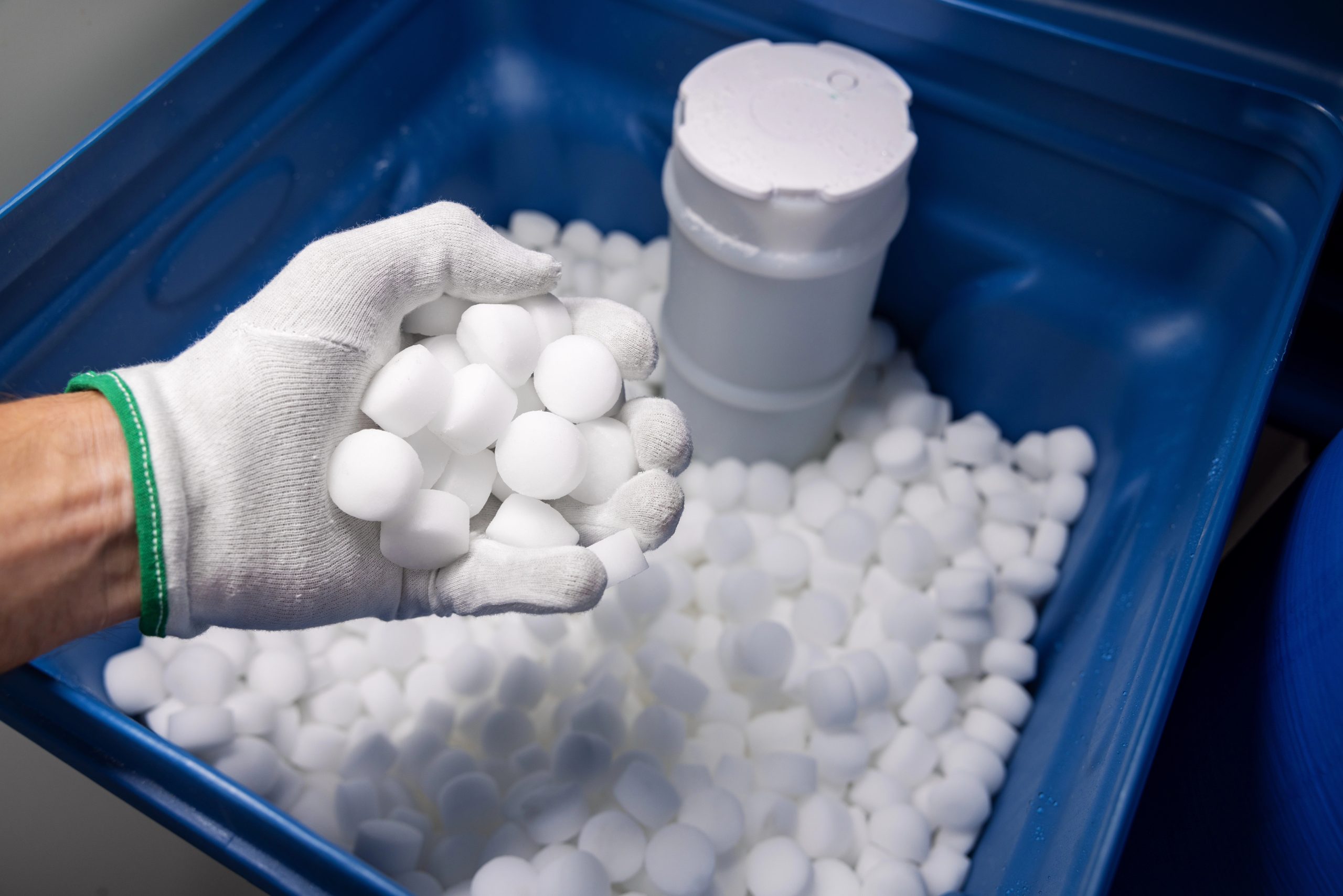
If your water tests above about 7 grains per gallon and you’re seeing scale, an OC water softener is the most direct fix. Softeners use ion exchange to remove the calcium and magnesium that cause buildup. Many OC homeowners also pair one with:
- Whole-home carbon filtration to reduce chloramine taste and odor at every tap.
- Under-sink reverse osmosis for drinking and cooking water, especially if you’d rather not drink softened water or want to cut back on bottled water. Our reverse osmosis systems are a popular add-on.
You can compare options on our water softener systems and whole home water treatment pages.
Matching Treatment to Your Orange County Home
The right system depends as much on your house as your water. Here’s how we typically think about it across OC:
Older single-family homes (Anaheim, Fullerton, Garden Grove, Orange): Mid-century plumbing has often handled hard water for decades. A whole-home softener protects what’s left, plus any new fixtures or appliances.
Newer master-planned homes (Irvine, Tustin, Ladera Ranch): Tankless water heaters, high-end fixtures and frameless glass showers are exactly what hard water is hardest on. Protecting them early beats descaling later.
Townhomes and condos: Space is tight and HOA rules may apply. Compact softeners and under-sink reverse osmosis often fit well.
Larger coastal and hillside homes (Newport Beach, Yorba Linda, Coto de Caza): More bathrooms and higher water use usually mean a higher-capacity system, so proper sizing matters most here.
Homeowner Tips
- Check your water bill to see which district serves you. Neighboring OC cities can have different suppliers and different hardness.
- Look up your district’s annual water quality report and find “Total Hardness.”
- Size a softener based on your hardness and your household’s water use, not square footage alone.
- If you have a tankless water heater, ask about softening before your next descaling service.
Why Local Expertise Matters in Orange County
Orange County isn’t one water system. It’s a patchwork of agencies blending groundwater and imported water in different ratios, so two homes a few miles apart can get noticeably different water.
That’s why EcoWater SoCal keeps a branch right here in Placentia. Our team knows OC water districts and OC homes. We’ll test your water at your tap, explain the numbers and recommend only what your home actually needs. Find out more on our service area page.
Frequently Asked Questions
Is Orange County water hard?
Yes. Most Orange County homes get hard to very hard water. Both local groundwater and imported Colorado River water carry high levels of calcium and magnesium, and many OC sources average above the USGS “very hard” threshold of 180 ppm.
How hard is the water in Irvine?
Irvine Ranch Water District’s 2026 Water Quality Report lists average hardness across its sources at roughly 214 to 293 ppm, or about 12.5 to 17 grains per gallon. That’s considered very hard water.
Is hard water in Orange County safe to drink?
Yes. Hardness comes from calcium and magnesium, which aren’t a health threat. Hard water mainly affects plumbing, appliances, cleaning and how your skin and hair feel.
Do I need a water softener in Orange County?
If your water tests above about 7 grains per gallon and you’re seeing spots, scale or water heater issues, a water softener is the most effective solution. A local water test will confirm your hardness and the right system size.
How do I find out my exact water hardness?
Check your water district’s annual water quality report for “Total Hardness,” then convert ppm to grains per gallon by dividing by about 17.1. For the most accurate reading, have your water tested at your own tap.
The Bottom Line
Orange County hard water is real, measurable and nearly universal across the county. Irvine water quality is safe and closely monitored, but local data puts its hardness firmly in the “very hard” range. That’s why so many OC homeowners deal with spotty glass, scaled fixtures and water heaters that wear out early.
The fix starts with knowing your numbers. Once you know your hardness and how your home uses water, choosing an OC water softener, filtration or a combination becomes straightforward. Ready to see what’s in your water? Get an Orange County water assessment with EcoWater SoCal today.